R&D

Pipeline

AccelBio selects and de-risk the most promising early drug discovery projects in academia and startups and develop them into investment-ready assets. One team creates and executes an integrated plan that includes experimental and business strategies to maximize research outputs:
Discovery
Target validation
Hit ID
ADMET
Discovery
Target validation
Hit ID
ADMET
CNS
Alzheimer's
Hit ID
Epilepsy ⁽¹⁾
Target Validation
Epilepsy ⁽²⁾
Discovery
Immunology and Infection
T-Cell Recruitment
Target Validation
Bacterial Infections
Target Validation
Oncology
Gastric Cancer
Target Validation
Metabolism
Obesity
Target Validation
Discovery
Target validation
Hit ID
ADMET
Five projects are in progress, but national calls will open to select projects from external organizations.

Pipeline

AccelBio selects and de-risk the most promising early drug discovery projects in academia and startups and develop them into investment-ready assets. One team creates and executes an integrated plan that includes experimental and business strategies to maximize research outputs:
Discoveries
Valley of Death
DERISK
Commercialization
Immunology
Oncology
Neurology
Target Validation
Hit ID
Lead optimization
Early admet
Licences
Co-develop.
Start ups
Window of opportunity
Five projects are in progress, but national calls will open to select projects from external organizations.

Technology Platforms

Organoids Platform​
Organoids closely mimic real cellular environments, providing strong predictive value for drug discovery.​ Compared to costly and time-consuming animal models, organoids are simpler, faster, more cost-effective, and offer greater versatility and reproducibility.​ AccelBio offers a unique platform featuring cardiac, kidney, and brain organoids for disease modeling, target validation, and drug safety and efficacy testing. Our expert team can also develop customized organoid models tailored to specific project requirements.
  • Cardiac Organoids
    Our 3D Heart Organoids display unique complexities, showing structures such as myocardium, epicardium, coronary vasculature, and sympathetic innervation, which increase its predictive value. These cardiac organoids can be applied for disease modeling (e.g. adult cardiomyopathies, congenital heart diseases & other), target validation & drug efficacy and cardiotoxicity tests.​
  • Kidney Organoid
    Our 2.5D and 3D Kidney organoids show a unique cell-type complexity (e.g. podocytes, proximal tube, distal tube) bringing an added value for disease modeling (e.g. acute kidney injury, chronic kidney disease or others upon request), target validation, and tests for drug efficacy and kidney toxicity.​
  • Brain Organoids
    We develop 2D & 3D Brain organoids for different brain regions (dorsal and ventral forebrain, midbrain and cerebellum) and its integration into assembloids.​
    These models are suitable for brain disease modeling, target validation, drug penetration assays and efficacy/safety tests.
Computer-aided drug discovery
Computer-aided drug discovery" para "Accelbio uses computer-based tools and mathematical models to simulate and analyze biological systems. It allows researchers to predict the behavior of complex biological processes—such as protein folding, metabolic pathways, or cell signaling—by integrating experimental data with theoretical frameworks. This approach helps in understanding system dynamics, testing hypotheses in silico, and guiding experimental design, making it a powerful tool in drug discovery, and personalized medicine.​
  • Molecular Modeling​
    Molecular modeling allows the simulation, and analysis of the structure and behavior of biological molecules at the atomic level. In drug discovery, it plays a key role in predicting how drugs interact with their targets, optimizing lead compounds, and studying molecular mechanisms of action. By enabling detailed visualization and simulation—such as molecular docking, dynamics, and structure refinement—molecular modeling helps researchers explore binding affinities, conformational changes, and physicochemical properties, thereby accelerating the rational design of new therapeutics.​
  • Protein Discovery and Engineering​
    This approach leverages in silico methods to identify novel protein targets and design or optimize proteins with desired properties for therapeutic applications. Using tools such as sequence alignment, structural modeling, molecular dynamics, and machine learning, our researchers can predict protein function, stability, and interactions. These approaches enable the rational design of protein variants with improved activity, specificity, or pharmacokinetics, accelerating the development of biologics and enhancing our understanding of protein roles in disease mechanisms.​
  • Bioinformatics​
    Bioinformatics allows the analysis integration, and visualization of heterogeneous sets of biological data—such as genomic, proteomic, and chemical information—to identify and validate potential drug targets. By leveraging computational tools, bioinformatics supports tasks like target identification, biomarker discovery, and virtual screening, ultimately streamlining the drug development process and enabling more precise and cost-effective therapeutic strategies.​
Multiomics
The high-throughput and affordability of current omics technologies, allowing quantitative measurements of many putative targets, have exponentially increased the volume of available data. Omics technologies offer an unprecedented ability to screen biological samples at the gene, transcript, protein, metabolite and their interaction network level.
  • Transcriptomics
    We provide analytical support for Transcriptomics & Single-cell RNA-seq, relevant for clinical applications in biomarkers discovery, patients' stratification and prognostic panels development. We provide reproducible results presented in a form of intuitive and interactive reports with publication-ready figures and tables with the key findings.​
  • Proteomics
    Based in our Associate Universidade de Coimbra (reference lab and alfa tester for Sciex, APCAR ISO 9001 Certified) our mass spectrometry platform allows for labelled and label free (ID/Quant) peptide identification, quantification and analysis of postranslational modifications. We also provide in-depth data analysis services to extract relevant data for drug and biomarker discovery.​
  • Metabolomics
    In our Associate Universidade de Coimbra, we apply high-resolution LC-MS/MS-based approaches to profile and quantify metabolites across various biological matrices. To enhance metabolite identification, we are currently developing an in-house MS² spectral library, including an expanding set of 300 metabolites.​
Innovative Therapeutic Modalities
Many advances in biotechnology are offering completely new opportunities to design therapeutics for disease mechanisms previously considered difficult, if not impossible, to target. Small molecules remain the most common modality used for medicines but they cannot be effectively applied to all biological targets and in all disease settings. As such, the fundamental structure of drugs has evolved to include a much wider array of options that allow the unlocking of “undruggable” targets.
Antibody-Drug Conjugates (ADC)
ADCs are highly targeted biopharmaceutical drugs that combine monoclonal antibodies that selectively bind to surface antigens present on specific cells with highly potent therapeutic agents linked via a chemical linker. Linker chemistries have a crucial role in ADC performance. We are developing a new class of bioconjugating linkers which will allow the development of ADCs with improved in vivo targeting properties.
High-throughput screening​
High-throughput screening (HTS) is a powerfull tool to accelerate drug discovery projects in different pre-clinical phases.​ Accelbio HTS platform based at our associate Universidade de Coimbra offers tailored assay development as well as compound and genomic screenings, enabling Hit and target Identification and Mechanism of Action Studies.
Antibody-Drug Conjugates (ADC)
Our HTS platform can conduct large-scale, high-content drug screening and genomic assays. These capabilities are driven by an expert team and state-of-art equipment located at Universidade de Coimbra, including Hamilton STAR and Hamilton Vantage liquid handling stations (managing 96-well plates) and a PerkinElmar Operetta high-content screening (HCS) microscope for high resolution imaging and multi-well plate analysis (from 6 to 384-well formats), and other equipment.​

External Collaborations

AccelBio is able to support your drug discovery projects from target validation to preclinical proof of concept, always aligned with the standards and regulations of the pharmaceutical industry:

R&D support: ideation andexperimental activities

Market analysis and business development

Please consult our catalogue for further information.
We can establish external collaborations via different mechanisms:

Collaborative Research

Collaborative Research

Collaborative research is where two (or more parties) contribute to a research project through their scientific contribution, background IP, research staff and/or funding. Collaboration agreements make provision for sharing IP that was jointly created as well as coordinated dissemination and commercialization activities where applicable.

Contract Research

Contract Research

Contract Research is a research requested by third party for a specific project to be carried out with identified aims and objectives. In return the third party pays the commercial price for the research. Results and IP generated are normally owned by the company.

Consortium Formation

Consortium Formation

A good consortium can enhance its competitiveness in securing funding for collaborative research projects, bringing together the collective strengths of its members to address complex challenges and contribute to advancements in the chosen field. AccelBio can integrate your competitive projects bringing together our collective expertise.

Labs

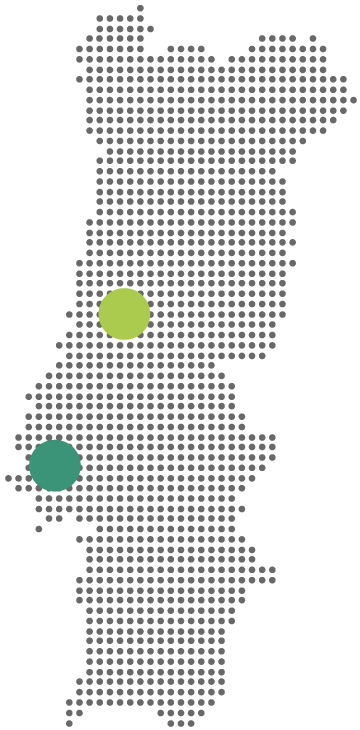
The CoLAB AccelBio makes use of a set of decentralized laboratories, which includes resources and equipments of the already existing laboratories in its Associate Members. This integrated network capitalizes on complementary skills, fostering a collaborative environment that optimizes the use of shared resources for enhanced efficiency.

University of Coimbra
•
Biotech

UC • Biotech

UC-Biotech is a research and business training infrastructure of the University of Coimbra for the Biotechnology sector. Located in Biocant Park in Cantanhede, AccelBio provides research at this site in collaboration with the labs of Bruno Manadas (mass spectrometry) and Miguel Mano (high-throughput screening platform).

University of Coimbra
•
Faculty of Pharmacy

FFUC

The Faculty of Pharmacy from the University of Coimbra, through the lab of Amilcar Falcão and with the support of Ana Fortuna, supports AccelBio in the ADMET studies in drug discovery projects, through its pharmacokinetic drug screening platform that includes in vitro, ex vivo and in vivo experimental models.

Instituto Superior Técnico
•
Institute of Bioengineering and Biosciences

iBB • IST

The Institute of Bioengineering and Biosciences, with a specific focus on the Stem Cell Engineering and Regenerative Medicine Research Group, is the home for part of the AccelBio team. This team specializes in advanced in vitro systems, notably hiPSC-based organoids, to explore drug efficacy and toxicity using models that closely mimic human biology.


Instituto de Medicina Molecular Gulbenkian
•
Gulbenkian Institute for Molecular Medicine

GiMM

At Gulbenkian Institute of Molecular Medicina, AccelBio is actively engaged in the development of target validation assays spanning diverse therapeutic fields.

Contact Us

geral@accelbio.pt+351 918 439 722
Call to national mobile network
Laboratório Colaborativo AccelBio
Biocant Park,
Parque Tecnológico de Cantanhede,
3060-197 Cantanhede
2026 Co-Lab AccelBio All rights reserved ©
|
Designed and built by BOTODACRUZ