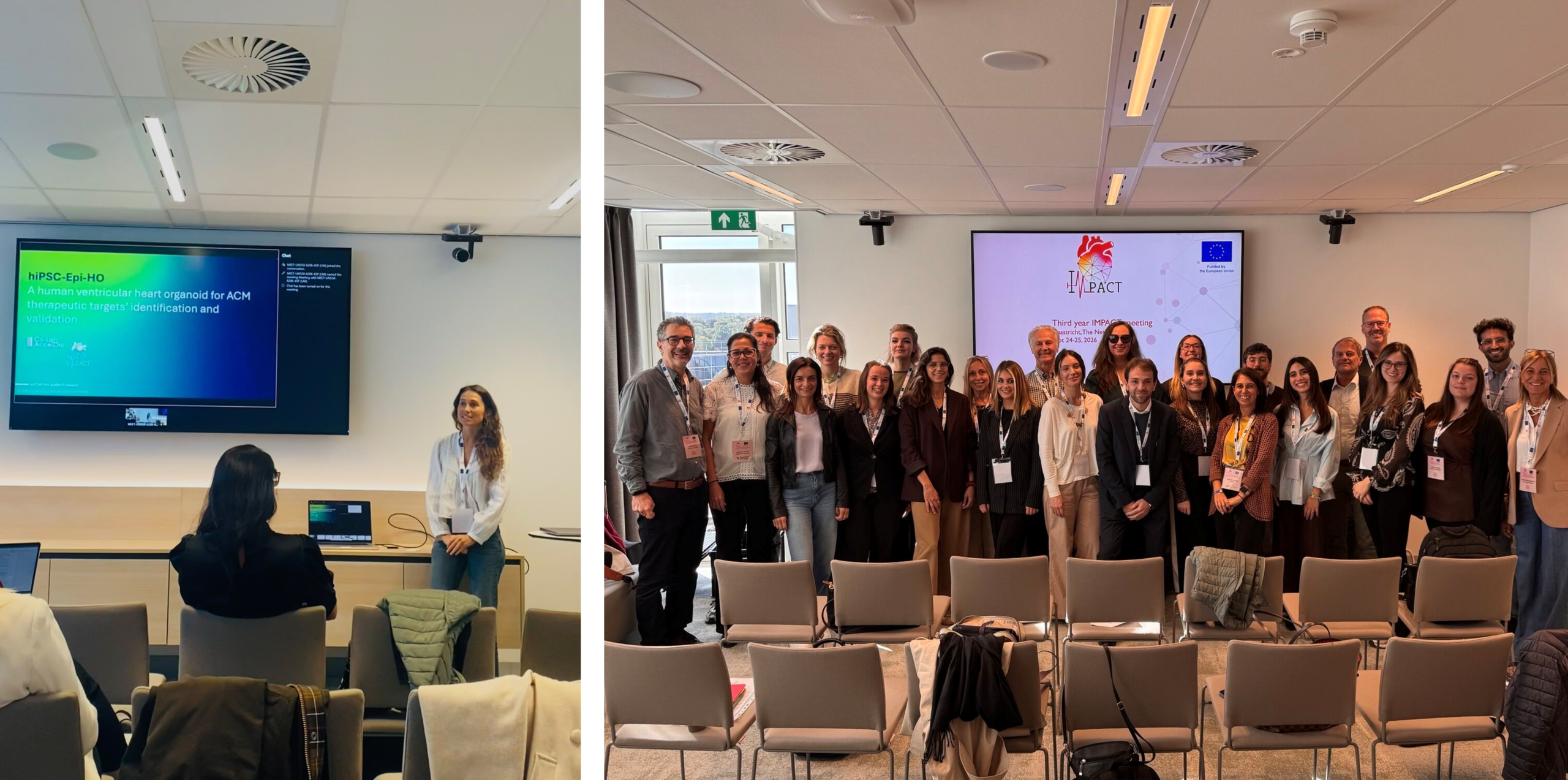
On September 24th and 25th, 2026, our researchers Mariana de Araújo Branco and Inês de Andrade Saraiva attended the 3rd Consortium Meeting of the IMPACT project, hosted by Maastricht University in the Netherlands. IMPACT (Cardiogenomics meets Artificial Intelligence: a step forward in Arrhythmogenic Cardiomyopathy diagnosis and treatment) is a European-funded initiative in which AccelBio is a partner, and the meeting brought the consortium together for two days of scientific exchange and planning as the project enters its final year.
Arrhythmogenic cardiomyopathy (ACM) is a genetic cardiovascular disease that predisposes individuals to ventricular arrhythmias and sudden cardiac death, particularly among young people and athletes. The disease is characterised by the progressive loss of cardiomyocytes and their replacement by fibrotic and fatty tissue, leading to structural and functional abnormalities of the heart. There are currently no effective treatments able to prevent or reverse its progression, so clinical management focuses on reducing the risk of sudden cardiac death and slowing the disease.
IMPACT aims to advance the understanding of ACM by combining large-scale omics data from patients with structural and functional analyses of in vitro and in vivo disease models. By integrating these complementary sources of information, the project seeks to identify and validate new molecular mechanisms and therapeutic targets for ACM, paving the way for new therapeutic strategies. Within the consortium, AccelBio contributes with a human heart organoid platform that supports the characterisation of the structural and molecular pathological features of ACM. By modelling disease-associated phenotypes in human heart organoids, we aim to shed light on the mechanisms underlying disease progression and contribute to the identification and validation of potential therapeutic targets.
At the meeting, Mariana presented AccelBio’s latest results and contributions to the project. The scientific sessions covered clinical data, predictive genetics, advanced disease models, therapeutic screening, and bioimage analysis, with particular attention to how AI tools can support more efficient and standardised image analysis. Partners also discussed the main priorities, open challenges, and activities for the final year, as well as the next steps towards turning these findings into new opportunities for ACM research and therapy.
We thank Maastricht University for hosting the meeting, and all IMPACT partners for the contributions, discussions, and energy brought to these two days.


